Ford™
- 4.7
- Rating
- 10.00M
- Installs
- Free
- Price

 Analysis by App-foxy
My first impression of Ford™ was that it feels less like a novelty companion and more like a digital control point for owning a Ford. The app sits in the lifestyle category, but that label undersells its practical role. It is free, made by Ford Motor Co., and the store summary now presents FordPass as the Ford app. In everyday use, that change matters because the experience is built around keeping vehicle-related tasks in one place rather than making me jump between separate tools.
I found the strongest reason to try it during the first week of ownership, when every small question feels more important than usual. Instead of treating the app as something to open once and forget, I used it as a bridge between the car and the information I needed around it. That made the early experience feel useful quickly, although the lasting value depends heavily on whether I actually own a compatible Ford and whether I am willing to keep the app connected to my regular driving habits.
What the first week feels like
The opening appeal is straightforward: Ford™ gives a Ford owner a single place to begin. The setup is not exciting in the way a social app or game can be, but it has a reassuring purpose. I can see why the app has attracted a 4.7 average from around 377 thousand ratings and passed 10 million installs. Those figures suggest that many owners see enough practical value to keep it around, rather than treating it as a one-time download.
You May Also Like

 Blood Strike: 2.5 Anniversary
Blood Strike’s Loadouts Turn Every Drop Into a Tactical Gamble
A close look at Blood Strike’s custom loadouts: how fast access to signature weapons reshapes its battle royale rhythm, rewards preparation, and narrows the gap between fights.

 Pandora - Music & Podcasts
Pandora’s Music Is Easy to Start, but Harder to Recover
Pandora’s strength is its low-effort path from a seed to a station. Its weak spot is how much confidence it asks you to place in connection, setup, and quiet recovery.

 8 Ball Pool
 Is Built on Rivalries, Rematches, and Routine
A close look at the rivalries, rematches, shared routines, and unanswered safety questions that turn a quick pool match into a persistent mobile community.

 Samsung Music
’s Quiet Strength Is Playing What You Already Own
Its reach comes less from spectacle than from dependable access to a personal library. That simplicity is both the app’s strongest retention engine and its ceiling.

 AccuWeather: Weather Radar
AccuWeather Review: A Quick, Clear Forecast for Everyday Decisions
For everyday plans, the best forecast is the one you can understand quickly. AccuWeather makes rain timing, radar, and local conditions easy to act on, with a few trade-offs.

 Hill Climb Racing
Why Hill Climb Racing Still Turns Crashes Into One More Run
A tiny car, a bumpy hill and one more upgrade: Hill Climb Racing keeps resurfacing because its simple chaos makes every near-miss feel personal.
More From Our News Desk
View All News


The first useful habit is checking the app before I need it. If I wait until I am standing beside the vehicle in a hurry, any account, vehicle-selection, or connection step becomes more irritating. I would install it at home, complete the sign-in process carefully, and make sure the correct vehicle is associated before relying on it during a busy morning. That small bit of preparation changes the app from a promising extra into something I can reach for without hesitation.
For a new owner, the app also helps create a mental map of the Ford ownership experience. Vehicle information, ownership-related tasks, and connected functions feel easier to understand when they are grouped under the manufacturer’s own app. I prefer this to collecting several unofficial utilities, especially when I want information tied to my specific Ford rather than general advice about cars.
There is an important limit, though. This is not a universal car-management tool that becomes equally useful for every driver. Its value is linked to the Ford vehicle and the services available for that ownership situation. Someone without a Ford, or someone looking only for a general trip planner, fuel log, or maintenance notebook, will probably find a dedicated alternative more focused and less dependent on vehicle compatibility.
Small routines that make the app worthwhile
One of my more useful routines is opening the app before leaving for an unfamiliar trip. I am not using it simply because it is installed; I am checking whether the information I need is already organized there. This is a better test than browsing through every screen on the first day. An app earns a permanent place when it removes a recurring decision, and Ford’s app can do that for an owner who regularly wants vehicle-specific information close at hand.
A second tip is to treat the app as a companion to the car, not a replacement for attention to the car itself. I would still inspect the vehicle, follow the owner’s guidance, and respond to warning signs directly. The convenience of a phone interface can create false confidence if I assume every ownership task can be solved from a screen. The best use is coordination: use the app to prepare, check, and organize, then deal with the vehicle properly.
The first week can also reveal whether notifications are helping or becoming noise. I prefer enabling only the alerts that support an actual routine and reviewing the rest after several days. A connected vehicle app can become tiring when every prompt feels equally urgent. Keeping the useful signals and ignoring the clutter is part of making the product sustainable.
Why the value changes after the novelty fades
After the initial curiosity disappears, the question becomes more demanding: does this app save enough time to deserve a permanent place on my phone? My answer is yes for an engaged Ford owner, but not automatically. The recurring value comes from reducing the friction around ownership, not from giving me a reason to browse the app for entertainment.
I think of the app as most valuable at transition points. Before driving, it can help me prepare. During ownership, it gives me a familiar destination for Ford-related tasks. When something about the vehicle needs attention, having one official starting point is more comfortable than searching the web and sorting through generic results. That convenience is modest on any single day, but it can add up over months.
A realistic scenario is a weekday morning when I am leaving for work and realize I need to think about the car before setting off. Rather than opening a browser, remembering which Ford page applies to my vehicle, and searching through old messages, I open the app first. If it has the relevant ownership information or connected action available, I have shortened the process. If it does not, I have still learned where the app’s boundaries are, which is useful knowledge for future trips.
The app is also a better fit for people who prefer official information over a collection of community tools. General automotive apps can be excellent for fuel prices, route planning, repair records, or reminders across different brands. Their advantage is breadth. Ford’s advantage is being centered on Ford ownership. I would choose the broader tool when I manage multiple makes or want detailed tracking across all vehicles, but I would choose this one when my main concern is staying close to one Ford.
How I would build it into a monthly routine
I would not open it every day just to prove that I use it. Instead, I would attach it to a few predictable moments: before a longer drive, when checking an ownership task, and whenever I need Ford-specific information. This approach prevents the app from becoming another dashboard that demands attention without offering anything new.
One non-obvious benefit of that approach is that it exposes gaps in my own ownership routine. If I keep postponing a vehicle-related task because I cannot remember where to find the details, the app becomes a reminder of the task’s place in my workflow. It does not remove the responsibility, but it can reduce the searching that makes simple maintenance feel harder than it should.
I would also avoid assuming that every connected feature will feel equally useful. Some functions may matter constantly to one owner and hardly at all to another. A driver with a predictable commute may value quick preparation, while someone who rarely drives may prefer a simpler manual reminder system. The app has lasting value when its available tools match the way I use the vehicle, not merely because the feature list looks impressive at installation.
Maintenance, setup, and the cost of keeping it useful
The financial barrier is low because the app is free, and its content rating is Everyone, which makes it broadly approachable. But “free” does not mean effortless. The real maintenance burden is attention: keeping the account usable, making sure the selected vehicle is correct, and checking that the app remains part of a sensible ownership routine.
I would periodically review whether the app is still connected to the vehicle and whether its information reflects my current situation. This is especially important after changing vehicles, sharing access, or altering the way I use the car. A stale app can be worse than no app because it may encourage me to trust information that I have not checked recently. The practical rule is simple: after any major ownership change, revisit the setup instead of assuming everything carried over perfectly.
Phone maintenance matters too. I would keep the app updated through the normal device process and avoid depending on it as the only way to handle something urgent. A phone battery, mobile connection, account issue, or software problem can interrupt any digital service. For routine convenience that is acceptable; for safety-critical decisions, I would use the vehicle’s own controls and follow the manufacturer’s guidance.
Another trade-off is the learning curve created by consolidation. Putting many ownership-related ideas into one Ford app is convenient, but it can also make the interface feel broader than a single-purpose tool. A dedicated reminder app may be faster for one narrow task. A general navigation app may be better for route planning. The Ford app earns its space by being the official center, not by winning every specialized category.
Where the app can create friction
The biggest source of friction is the gap between expectation and availability. Seeing an action in an app does not necessarily mean it will be equally useful for every Ford owner, because the experience depends on the vehicle and ownership context. I would therefore judge it by the functions that work for my specific car, not by assuming that another owner’s experience will be identical.
Account-based services can also feel slower than paper or a simple local note. When I am in a hurry, I want the app to open, recognize my situation, and show the relevant information without making me rethink the setup. If I have to search through several areas for something I use regularly, the convenience advantage shrinks. This is why building a small personal routine during the first week is worthwhile.
Notifications are another possible fatigue point. I like reminders that help me act, but I do not want a stream of prompts that turns the app into background noise. My advice is to evaluate alerts by outcome: did the notification help me prepare, remember, or resolve something? If not, it is probably not earning its place in my attention.
The app can also encourage overreliance on the phone. I would not use it while driving, and I would not let a convenient digital check replace basic vehicle awareness. The best experience comes when I use it before a journey or while parked, then put the phone away. That sounds obvious, but connected-car apps are easiest to misuse when convenience is confused with permission to interact at the wrong time.
Who should keep it and who should skip it
I would recommend keeping it if you own a Ford and want one official place for vehicle-related information and connected ownership tasks. It is particularly suitable for new owners, people who like organized digital records, and drivers who regularly prepare for trips through their phone. The free entry point makes it easy to test without committing money, and the broad Everyone rating means it is not positioned as a niche or restricted utility.
I would be more cautious if you own several vehicle brands. In that case, a multi-brand vehicle-management app may give you a more consistent routine across the household, even if it lacks Ford-specific depth. I would also skip it if I only wanted a basic mileage log, a universal maintenance reminder, or a general navigation tool. Those needs can be handled more directly elsewhere, with less manufacturer-specific structure.
It is not the right choice for someone who dislikes account-based digital services or rarely uses a smartphone around car ownership. The app’s benefit comes from repeated access and organization. If I am unwilling to complete setup, review the vehicle connection, or adjust notifications, the download becomes little more than unused storage.
For families or shared vehicles, I would decide in advance who is responsible for the app’s account and routine. Shared ownership can make a central tool useful, but it can also create confusion if different people expect different information or actions to appear. Clear responsibility is a practical improvement that does not require any special feature: one person keeps the setup current, while everyone knows the app is a convenience rather than the only source of truth.
My long-term verdict after the novelty wears off
Ford’s app earns lasting space when I treat it as an ownership utility, not as an app I am supposed to admire. The first week provides the strongest sense of discovery, but the month-to-month case is quieter: fewer searches, a more familiar place to begin, and a closer connection between my phone and my Ford. That is not dramatic, yet it is exactly the kind of recurring value that can justify keeping a practical app installed.
My honest reservation is that the experience is only as strong as the match between the app, the vehicle, and my habits. A driver looking for one universal automotive tool may prefer a broader alternative. Someone who wants a tiny, specialized reminder may find Ford’s wider ownership focus unnecessary. The app is not a substitute for maintenance, safe driving, or direct attention to the vehicle, and it can become tiring if notifications and setup are left unmanaged.
Still, I would recommend trying it to a Ford owner before deciding it has no place in a regular routine. Give it a proper setup, test it during a real trip, and judge whether it removes repeated friction rather than whether it feels impressive on day one. Developed by Ford Motor Co. and available free of charge, it has the right foundation for that trial. Its release on April 28, 2016, also places it in a mature category of ownership tools rather than a brand-new experiment.
My final view is simple: keep it if it makes your Ford easier to manage, not merely because it came from Ford. In my experience, that standard separates the useful connected-car companion from the app that slowly fades into an unused folder. For the right owner, it becomes a quiet monthly helper. For everyone else, a focused alternative may be the better long-term choice.
FAQs for Ford™
01What features does the Ford™ app offer?
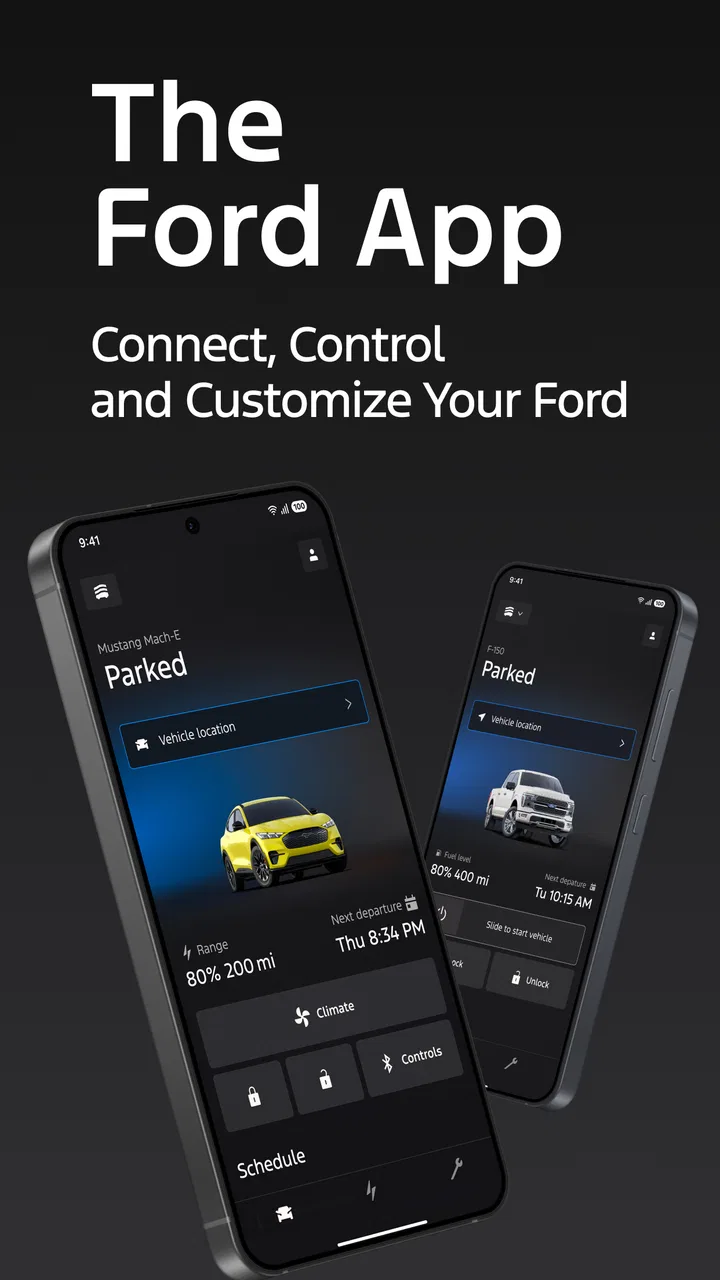
The Ford™ app provides a comprehensive suite of features designed to enhance your driving experience. You can remotely start or stop your vehicle, lock or unlock doors, and locate your car in a crowded parking lot. Additionally, the app offers vehicle health alerts, maintenance reminders, and integration with Ford’s Sync system for seamless connectivity.
02Is the Ford™ app compatible with all Ford vehicles?
Compatibility varies by model and year. Generally, newer models equipped with FordPass Connect are fully compatible with the Ford™ app. It’s recommended to check the app’s compatibility section or consult with your dealer to ensure your specific vehicle model can utilize all available features.
03How secure is the Ford™ app?
Security is a top priority for the Ford™ app, which employs advanced encryption and security protocols to protect user data. Features like remote access are safeguarded with multi-factor authentication, ensuring that only authorized users can control or monitor their vehicle functions.
04Does the Ford™ app require a subscription?
The app itself is free to download and use; however, some features, like connected services, may require a subscription. Ford offers various plans, including free trials for new users. It’s best to review the app’s terms or contact Ford customer service for detailed information on subscription options.
05Can I use the Ford™ app in multiple regions or countries?
The Ford™ app is designed for use in various regions, though availability of features can differ by country due to regulatory requirements and network availability. It’s advisable to check the app’s regional settings or Ford’s official website for more information on international usability.
Pros
- User-friendly interface with intuitive navigation.
- Extensive car model selection for easy browsing.
- Real-time vehicle health alerts and updates.
- Efficient remote start and stop functionality.
- Seamless integration with smart home devices.
Cons
- Limited compatibility with older car models.
- Occasional connectivity issues reported by users.
- Features dependent on stable internet connection.
- Some in-app purchases are expensive.
- Limited customization options for notifications.

Ford™
Gallery